

By: NAOMI ULICI
IRVINE WORLD NEWS
May 8, 2005
View PDF
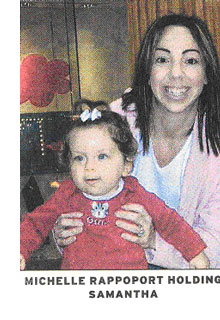 Michelle Rappoport of Northwood will never take Mother’s Day for granted. Her one-year-old baby, Samantha Ruby, is a miracle child thanks to genetic selection and invitro fertilization.
As a carrier for a hereditary bleeding disease called hemophilia, Rappoport was determined to not see any child of hers suffer. Her father had the disease.
Growing up in Woodbridge, she remembers the constant hospital visits. He died from the disease in his early 50s. “My family went through an enormous amount of suffering as a result of his disease” Michelle said.
Because baby boys have a 50 percent chance of having the disease, the Rappoports decided to only have a baby girl.
In 2003, she and her husband, Mike, approached Irvine doctor Lawrence Werlin, a specialist in pre-implantation genetic diagnosis, a method that allows embryos to be tested for genetic conditions, thereby removing the risk of giving birth to a child who would carry the disease.
The couple endured two treatments. During the first cycle, she ovulated too soon and no embryos could be extracted.
The second time around, the treatment produced four embryos. The couple implanted one embryo and prayed for success.
The call came on May, 12, 2003, her father’s birthday. Michelle Rappoport was going to be a mother.
We caught up with her to ask her about becoming a mother.
What’s it like celebrating Mother’s Day?
I don’t have a word for it. I had a lot of expectations about being a mom, I couldn’t have imagined how good it is. It’s so much more of a blessing that I expected. What’s interesting is that you realize that other people kind of take it for granted. I go to this mom’s group, and I hear them complain. I don’t get the complaining. It’s hard to see anything wrong with my baby. I’ve got such a new appreciation for motherhood, especially my mom.
This Mother’s Day, we’re spending it with my family, my mom, brother and his three girls. We’re celebrating all the kids.
Have you always wanted to be a mom?
Yes, every since I can remember. I was always playing with dolls, baby-sitting kids when I got older.
Did you and your husband talk about children before marriage?
That’s when I brought it up, we both knew when we were dating that we wanted children. I told him up front, that I was a carrier for the disease, that my father had had it, and that the only way I could for sure have a healthy baby was to have a girl. He was very supportive, even though it wasn’t fun. Not like the “traditional” way of making a baby.
What was the process like?
The whole thing lasted about six weeks. They stimulated the ovaries, gave me hormones to start the process and hormones to control the reaction. I started off with 12 or 13 good eggs and then came the process of elimination. I got down to half, checked for sex, all of them were male. We were left with one embryo, a healthy girl. That’s all we had to implant. Usually they put in three or four eggs and hope that one implants, but we only had one.
How many cycles did you attempt? Would you have gone further if it didn’t work?
Two. The first time didn’t work. After seeing a counselor, we came to the conclusion that financially and emotionally, we couldn’t handle more than a handful of treatments, but then the second time worked.
What was it like when it didn’t work the first time?
I was devastated. It was so difficult emotionally, especially for the two weeks I had to lie down, get a shot in the hip every day, etc. Then when it failed, the whole thing became scary, we were kind of like infertile patients that couldn’t conceive. I was going in there thinking, “oh yeah, 99 percent pregnancy chance.” This was the first time in 30 years that it hit me that I could possibly not be able to conceive.
Did you look at other options?
We were looking at hiring a surrogate mother or adopting. I decided that no matter what, I’m going to be a mom. The end result was number one priority, a healthy baby.
Would you consider having another one the same way?
We’d love to have another one. If we didn’t have to do this it wouldn’t be a question. Of course, we would have another. But with all the financial ramifications, we’re not sure if we can. Also, I had a rough pregnancy. I had complications and was put on bed rest for a month. I’m prone to having it again. At one point, they weren’t sure the baby was OK, I ignored it and decided that she was going to be OK.
Ever wish for a boy?
My fear was that my husband would want a son, but he’s been totally supportive. He knew what we had dealt with after my father’s death, and he realized the health of the child is more important than the sex. Now Samantha is daddy’s little girl. He couldn’t imagine not having a girl.
What was it like seeing other women get pregnant?
I was never jealous. I would look at pregnant people and be so excited for them, I have other friends that couldn’t even go to a baby shower. My sister-in-law got pregnant with twins the first try, and she had a lot more fun than we did, and here’s us, “We have to have a girl, and you’re getting two the easy way!”
How expensive was it?
The insurance covered nothing, they said, “risk it. Have an unhealthy baby and let the government pay for their care,” and some people choose that, but not us. We spent close to $20,000 out of pocket, plus lab fees and medication.
What’s Samantha like?
She’s resilient. She made it through genetic biopsy and implantation, so she’s been through the ringer.
And she’s the happiest person on earth. She could be really sick, but she’s still smiling and laughing. I have this photo of her, cracking up watching her Baby Einstein videos though she’s taking medicine. She is a joy.
View PDF
Michelle Rappoport of Northwood will never take Mother’s Day for granted. Her one-year-old baby, Samantha Ruby, is a miracle child thanks to genetic selection and invitro fertilization.
As a carrier for a hereditary bleeding disease called hemophilia, Rappoport was determined to not see any child of hers suffer. Her father had the disease.
Growing up in Woodbridge, she remembers the constant hospital visits. He died from the disease in his early 50s. “My family went through an enormous amount of suffering as a result of his disease” Michelle said.
Because baby boys have a 50 percent chance of having the disease, the Rappoports decided to only have a baby girl.
In 2003, she and her husband, Mike, approached Irvine doctor Lawrence Werlin, a specialist in pre-implantation genetic diagnosis, a method that allows embryos to be tested for genetic conditions, thereby removing the risk of giving birth to a child who would carry the disease.
The couple endured two treatments. During the first cycle, she ovulated too soon and no embryos could be extracted.
The second time around, the treatment produced four embryos. The couple implanted one embryo and prayed for success.
The call came on May, 12, 2003, her father’s birthday. Michelle Rappoport was going to be a mother.
We caught up with her to ask her about becoming a mother.
What’s it like celebrating Mother’s Day?
I don’t have a word for it. I had a lot of expectations about being a mom, I couldn’t have imagined how good it is. It’s so much more of a blessing that I expected. What’s interesting is that you realize that other people kind of take it for granted. I go to this mom’s group, and I hear them complain. I don’t get the complaining. It’s hard to see anything wrong with my baby. I’ve got such a new appreciation for motherhood, especially my mom.
This Mother’s Day, we’re spending it with my family, my mom, brother and his three girls. We’re celebrating all the kids.
Have you always wanted to be a mom?
Yes, every since I can remember. I was always playing with dolls, baby-sitting kids when I got older.
Did you and your husband talk about children before marriage?
That’s when I brought it up, we both knew when we were dating that we wanted children. I told him up front, that I was a carrier for the disease, that my father had had it, and that the only way I could for sure have a healthy baby was to have a girl. He was very supportive, even though it wasn’t fun. Not like the “traditional” way of making a baby.
What was the process like?
The whole thing lasted about six weeks. They stimulated the ovaries, gave me hormones to start the process and hormones to control the reaction. I started off with 12 or 13 good eggs and then came the process of elimination. I got down to half, checked for sex, all of them were male. We were left with one embryo, a healthy girl. That’s all we had to implant. Usually they put in three or four eggs and hope that one implants, but we only had one.
How many cycles did you attempt? Would you have gone further if it didn’t work?
Two. The first time didn’t work. After seeing a counselor, we came to the conclusion that financially and emotionally, we couldn’t handle more than a handful of treatments, but then the second time worked.
What was it like when it didn’t work the first time?
I was devastated. It was so difficult emotionally, especially for the two weeks I had to lie down, get a shot in the hip every day, etc. Then when it failed, the whole thing became scary, we were kind of like infertile patients that couldn’t conceive. I was going in there thinking, “oh yeah, 99 percent pregnancy chance.” This was the first time in 30 years that it hit me that I could possibly not be able to conceive.
Did you look at other options?
We were looking at hiring a surrogate mother or adopting. I decided that no matter what, I’m going to be a mom. The end result was number one priority, a healthy baby.
Would you consider having another one the same way?
We’d love to have another one. If we didn’t have to do this it wouldn’t be a question. Of course, we would have another. But with all the financial ramifications, we’re not sure if we can. Also, I had a rough pregnancy. I had complications and was put on bed rest for a month. I’m prone to having it again. At one point, they weren’t sure the baby was OK, I ignored it and decided that she was going to be OK.
Ever wish for a boy?
My fear was that my husband would want a son, but he’s been totally supportive. He knew what we had dealt with after my father’s death, and he realized the health of the child is more important than the sex. Now Samantha is daddy’s little girl. He couldn’t imagine not having a girl.
What was it like seeing other women get pregnant?
I was never jealous. I would look at pregnant people and be so excited for them, I have other friends that couldn’t even go to a baby shower. My sister-in-law got pregnant with twins the first try, and she had a lot more fun than we did, and here’s us, “We have to have a girl, and you’re getting two the easy way!”
How expensive was it?
The insurance covered nothing, they said, “risk it. Have an unhealthy baby and let the government pay for their care,” and some people choose that, but not us. We spent close to $20,000 out of pocket, plus lab fees and medication.
What’s Samantha like?
She’s resilient. She made it through genetic biopsy and implantation, so she’s been through the ringer.
And she’s the happiest person on earth. She could be really sick, but she’s still smiling and laughing. I have this photo of her, cracking up watching her Baby Einstein videos though she’s taking medicine. She is a joy.
View PDF
Michelle Rappoport of Northwood will never take Mother’s Day for granted. Her one-year-old baby, Samantha Ruby, is a miracle child thanks to genetic selection and invitro fertilization.
As a carrier for a hereditary bleeding disease called hemophilia, Rappoport was determined to not see any child of hers suffer. Her father had the disease.
Growing up in Woodbridge, she remembers the constant hospital visits. He died from the disease in his early 50s. “My family went through an enormous amount of suffering as a result of his disease” Michelle said.
Because baby boys have a 50 percent chance of having the disease, the Rappoports decided to only have a baby girl.
In 2003, she and her husband, Mike, approached Irvine doctor Lawrence Werlin, a specialist in pre-implantation genetic diagnosis, a method that allows embryos to be tested for genetic conditions, thereby removing the risk of giving birth to a child who would carry the disease.
The couple endured two treatments. During the first cycle, she ovulated too soon and no embryos could be extracted.
The second time around, the treatment produced four embryos. The couple implanted one embryo and prayed for success.
The call came on May, 12, 2003, her father’s birthday. Michelle Rappoport was going to be a mother.
We caught up with her to ask her about becoming a mother.
What’s it like celebrating Mother’s Day?
I don’t have a word for it. I had a lot of expectations about being a mom, I couldn’t have imagined how good it is. It’s so much more of a blessing that I expected. What’s interesting is that you realize that other people kind of take it for granted. I go to this mom’s group, and I hear them complain. I don’t get the complaining. It’s hard to see anything wrong with my baby. I’ve got such a new appreciation for motherhood, especially my mom.
This Mother’s Day, we’re spending it with my family, my mom, brother and his three girls. We’re celebrating all the kids.
Have you always wanted to be a mom?
Yes, every since I can remember. I was always playing with dolls, baby-sitting kids when I got older.
Did you and your husband talk about children before marriage?
That’s when I brought it up, we both knew when we were dating that we wanted children. I told him up front, that I was a carrier for the disease, that my father had had it, and that the only way I could for sure have a healthy baby was to have a girl. He was very supportive, even though it wasn’t fun. Not like the “traditional” way of making a baby.
What was the process like?
The whole thing lasted about six weeks. They stimulated the ovaries, gave me hormones to start the process and hormones to control the reaction. I started off with 12 or 13 good eggs and then came the process of elimination. I got down to half, checked for sex, all of them were male. We were left with one embryo, a healthy girl. That’s all we had to implant. Usually they put in three or four eggs and hope that one implants, but we only had one.
How many cycles did you attempt? Would you have gone further if it didn’t work?
Two. The first time didn’t work. After seeing a counselor, we came to the conclusion that financially and emotionally, we couldn’t handle more than a handful of treatments, but then the second time worked.
What was it like when it didn’t work the first time?
I was devastated. It was so difficult emotionally, especially for the two weeks I had to lie down, get a shot in the hip every day, etc. Then when it failed, the whole thing became scary, we were kind of like infertile patients that couldn’t conceive. I was going in there thinking, “oh yeah, 99 percent pregnancy chance.” This was the first time in 30 years that it hit me that I could possibly not be able to conceive.
Did you look at other options?
We were looking at hiring a surrogate mother or adopting. I decided that no matter what, I’m going to be a mom. The end result was number one priority, a healthy baby.
Would you consider having another one the same way?
We’d love to have another one. If we didn’t have to do this it wouldn’t be a question. Of course, we would have another. But with all the financial ramifications, we’re not sure if we can. Also, I had a rough pregnancy. I had complications and was put on bed rest for a month. I’m prone to having it again. At one point, they weren’t sure the baby was OK, I ignored it and decided that she was going to be OK.
Ever wish for a boy?
My fear was that my husband would want a son, but he’s been totally supportive. He knew what we had dealt with after my father’s death, and he realized the health of the child is more important than the sex. Now Samantha is daddy’s little girl. He couldn’t imagine not having a girl.
What was it like seeing other women get pregnant?
I was never jealous. I would look at pregnant people and be so excited for them, I have other friends that couldn’t even go to a baby shower. My sister-in-law got pregnant with twins the first try, and she had a lot more fun than we did, and here’s us, “We have to have a girl, and you’re getting two the easy way!”
How expensive was it?
The insurance covered nothing, they said, “risk it. Have an unhealthy baby and let the government pay for their care,” and some people choose that, but not us. We spent close to $20,000 out of pocket, plus lab fees and medication.
What’s Samantha like?
She’s resilient. She made it through genetic biopsy and implantation, so she’s been through the ringer.
And she’s the happiest person on earth. She could be really sick, but she’s still smiling and laughing. I have this photo of her, cracking up watching her Baby Einstein videos though she’s taking medicine. She is a joy.
View PDF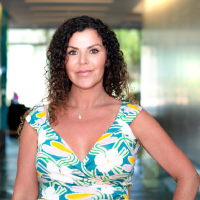
Julianna Nikolic
Chief Strategy Officer Julianna Nikolic leads strategic initiatives, focusing on growth, innovation, and patient-centered solutions in the reproductive sciences sector. With 26+ years of management experience and a strong entrepreneurial background, she brings deep expertise to advancing reproductive healthcare.




 Make a Payment